
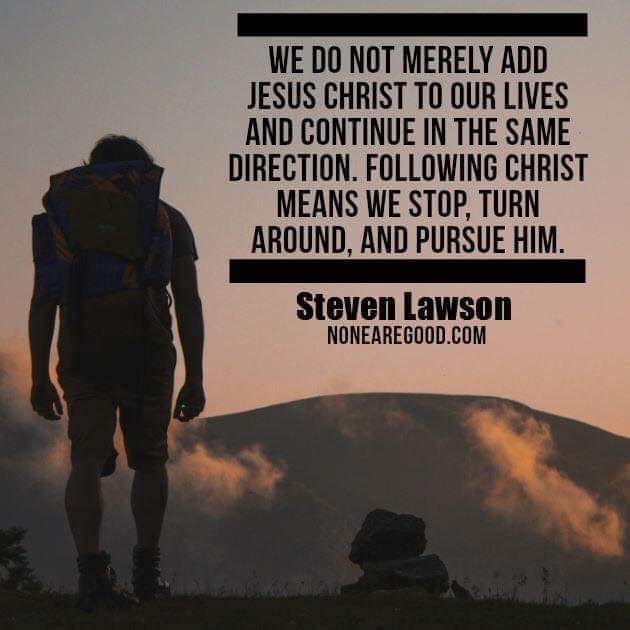
We Do Not Merely Add
They say I’m poor,
They say I’m nothing.
They say I’m poor and they say I’m nothing because I’ve got nothing to offer to any living soul.
I’ve got no money, no food, no child, no wife nor husband and no home to go home to that is because I’ve got no money.
But I say I’m blessed
I’m blessed because God told me so.
He loves me the same way he loves every life on earth. I’m blessed because I’m still alive.
I breathe the same air that rich men breathe,
I walk on the same ground that rich men walk . . . therefore I am no different.
I am rich with life
I am rich with love
I’m rich with hope that one day they will see the beauty that God treasured in me because I am something indeed
By Londeka Zondi
a 19 year old from South Africa
by Mike Bennett

After Adam and Eve ate the fruit that God told them not to eat, they had to move out of the beautiful Garden of Eden. Their lives were harder now because they had chosen to disobey God.
Adam and Eve had a baby, and they called him Cain. His mother said, “I have gotten a man from the Lord.” Perhaps she thought he would be the one who God promised would defeat Satan. Even if she didn’t, she certainly had high hopes for her firstborn son.
Then Adam and Eve had another baby boy. He was named Abel.
Cain and Abel were different in many ways. Cain grew up to be a farmer. Abel raised sheep.
More important, their attitude toward God was different. Abel gave an offering to God, and it was the best he had. Abel believed and trusted God (Hebrews 11:4).
Cain also gave an offering to God, but the Bible says God was not happy with it.
Cain got very angry. Perhaps he felt it was unfair. Maybe he was jealous that God was happy with Abel.
But God cared about Cain too. He asked Cain, “Why are you angry?” God told Cain that if he did the right things, God would be happy with him. But if not, he was in danger of sin. Just as when Satan talked Cain’s parents into sinning, sin was waiting to pounce on Cain. God told him to rule over these bad attitudes.
But Cain didn’t listen. He got angrier and convinced himself he was right.
Sin can lead us to do things we did not plan to do. The results of sinful thinking and acting may be far worse than we intended.
Cain was so mad he murdered his brother! Cain killed Abel because Cain’s “works were evil and his brother’s righteous” (1 John 3:12). He didn’t like being shown up by his younger brother. Satan is a hater, and Cain chose to hate too. So when they were alone in the field, Cain killed Abel.
Cain thought no one had seen him do it. But Cain should have known that he couldn’t hide from God. God knew what happened, but he gave Cain the chance to admit it. God asked Cain, “Where is Abel your brother?”
Cain said, “I do not know. Am I my brother’s keeper?”
But Cain lied. He knew exactly where Abel’s body was.
And he knew that we all should do our best to take care of our brothers. We can’t control our brothers and sisters, but we shouldn’t do anything to hurt them. We should help and care for them. In that way we are our brother’s keeper.
God knew exactly what Cain had done. He knew Cain was lying. It was as if Abel’s shed blood was crying out to God that a terrible murder occurred.
Cain’s final punishment would be to die. But before that, God told Cain about the curses he would face. The ground wouldn’t grow as much food for him, and he would have to work harder. He would have to move around and worry that others would try to kill him.
Cain complained that the punishment was too much. He did not say he was sorry. He did not admit that he had done a terrible thing.
But God did not want other people to take revenge on Cain. He put a mark on Cain to remind people not to kill him.
Cain picked the road that leads to death. He chose to be selfish. He chose to trust in himself instead of God. He chose to think about his hurt pride. The Bible calls this the way of Cain (Jude 1:11).
We must remember that when we get mad, sin is waiting to pounce on us too. We must remember that hating others is like murder (1 John 3:15). We must ask God to help us rule over ourselves and sin. We must try to care for our brothers and sisters.
We must not follow the way of Cain.
Here are some questions to think about or talk about as a family:
If you grew up with a lot of exposure to the Bible, it might be easy to assume the authors of the books of the Bible were like modern journalists: writing things down as they happened. However, this was not the case. The Bible includes stories from the first century CE as well as stories about the beginnings of the cosmos—but most biblical scholars agree that the books we find these stories in reached their present forms between 350 BCE and 150 CE.
Of course, these books reference sources from outside that window. For example, parts of the Torah rely on oral traditions and writings that are much older than the present form of the Pentateuch, and the Song of Deborah (the fifth chapter in the book of Judges) is often referred to as one of the oldest works of Hebrew poetry in the Bible.
It has been my observation the Holy Spirit has many different tasks; this includes indwelling believers to bind them together with God and help them become more like Him. For Christians, the experience of eternal life does not begin at death but when they trust in Jesus and God places His Spirit within them (see 2 Timothy 1:14). Paul says — Now it is God who makes both us and you stand firm in Christ. He anointed us, set His seal of ownership on us, and put His Spirit in our hearts as a deposit, guaranteeing what is to come (2 Corinthians 1:21-22). Holy Spirit equips people for ministry, is our guarantee (deposit) of eternal life, gives people insight and wisdom, teaches people truth, communicates with the Father on people’s behalf, and empowers Christians to walk with God.
He lives within followers of Jesus and produces lasting change in their character. John 14:26 says — But the Advocate, the Holy Spirit, whom the Father will send in My name, will teach you all things and will remind you of everything I have said [NIV]. He produces God’s love in human hearts. Romans 5:5 says — “Hope does not put us to shame, … God’s love has been poured out into our hearts through the Holy Spirit [NIV]. The Holy Spirit speaks the truth. John 16:13 says — When He, the Spirit of truth, comes, He will guide you into all the truth. He will not speak on His own; He will speak only what He hears, and He will tell you what is yet to come [NIV]. This infusion of the Spirit is remarkable, life changing, stabilizing, and essential.
The Holy Spirit is a promise of the great things to come for those who trust God. Ephesians 1:13-14 says You also were included in Christ when you heard the message of truth, the gospel of your salvation. When you believed, you were marked in Him with a seal, the promised Holy Spirit, who is a deposit guaranteeing our inheritance until the redemption of those who are God’s possession [NIV]. He provides us with the skills and abilities necessary to share God’s love. Hebrews 2:4 says — God also testified to it by signs, wonders, and various miracles, and by gifts of the Holy Spirit distributed according to His will [NIV].
Jesus Himself was filled with the Holy Spirit to carry out His ministry. Luke 4:18 says — The Spirit of the Lord is on Me, because He has anointed Me to proclaim good news to the poor. He has sent Me to proclaim freedom for the prisoners and recovery of sight for the blind, to set the oppressed free [NIV]. Jesus spent a lot of time talking about the Holy Spirit and wanted His disciples to understand the power of the Spirit. He told them it was “better” for them that He leave, because then the Holy Spirit would be sent to them (implied in John 16:7).
The first followers of Jesus were filled with God’s Spirit to take the gospel to the known world, and so are we. Acts 2:1-4 says — When the day of Pentecost came, they were all together in one place. Suddenly a sound like the blowing of a violent wind came from heaven and filled the whole house where they were sitting. They saw what seemed to be tongues of fire that separated and came to rest on each of them. All of them were filled with the Holy Spirit and began to speak in other tongues as the Spirit enabled them [NIV].
This passage from Acts is vital to understanding the Holy Spirit. After Jesus died, rose again, and ascended to heaven, the Holy Spirit came down and filled up every disciple and apostle of Christ to spread the gospel to the world. Now, whenever anyone puts their faith in Christ, the Holy Spirit immediately lives within them. God’s people get to experience the power of the Holy Spirit like Jesus did. The Holy Spirit provides believers with the strength to live the Christian life. John 15:5 says — Yes, I am the vine; you are the branches. Those who remain in Me, and I in them, will produce much fruit. For apart from Me you can do nothing [NIV]. It is the Holy Spirit who convinces us that Jesus is the way, the truth, and the life.
I choose Jesus.
“There is no peace like the peace of those whose minds are possessed with full assurance that they have known God, and God has known them, and that this relationship guarantees God’s favor to them in life, through death and on forever.” — a quote from JI Packer
It has been my observation while reading Ecclesiastics that Solomon struggled to find something new that had not been done. He really struggled with this idea. Permit me to fast forward and talk about things that are new today. Consider the lowly cell phone, our ability to talk to computers, and Artificial Intelligence (AI). Were we not introduced to these things in the mid 60’s by the Star Trek Communicator? Gene Roddenberry created the prototype Star Trek show in 1964, you may recall that most historians believe that Gene was influenced by the thought ‘engine’ in Gulliver’s Travels, a 17th century novel. In the mid 60’s Captain Kirk used a flip-phone and talked to his computer all the time, just like we do now. So, do we really have ‘new stuff’ or just clever remakes and embellishments 60 years later? New Stuff? In 1956 the initial ideas for AI were explored at Dartmouth – I took a few classes on AI software development at the University of Nebraska in 1985. Now, 70 years later, Google uses AI for routine searches. Yep, I think Solomon got it right, nothing much is new under the sun.
We read in Ecclesiastes 2: 12-17 — I turned my thoughts to consider wisdom, and also madness and folly. What more can the king’s successor do than what has already been done? I saw that wisdom is better than folly, just as light is better than darkness. … Then I said to myself, “The fate of the fool will overtake me also. What then do I gain by being wise?” I said to myself, “This too is meaningless.” For the wise, like the fool, will not be long remembered; the days have already come when both have been forgotten. Like the fool, the wise too must die. So, I hated life, the work that is done under the sun was grievous to me. All of it is meaningless, chasing after the wind [NIV].
At the beginning of chapter 2, Solomon builds and creates everything he can imagine, his world is opulent. Yet, when he completes the work, he felt no satisfaction. Just more angst. He learned that ‘doing stuff’ without a goal outside of himself leads to the blahs. When he did things that included God, he felt settled, content. With out God in the formula, any pleasure derived from the action was short lived, the pleasure wore off and he drifted deeper into despair and self-hate.
He wonders if things would have been different without God’s wisdom. Perhaps being a simpleton, oblivious to the endgame, was best. In time, he reasoned that enjoying God’s company was a better plan. God’s wisdom prevailed.
Ecclesiastes 2:22-26 says — What do people get for all the toil and anxious striving with which they labor under the sun? All their days the work is grief and pain; even at night their minds do not rest. This too is meaningless. A person can do nothing better than to eat and drink and find satisfaction in their own toil. This too is from the hand of God, for without him, who can eat or find enjoyment? To the person who pleases him, God gives wisdom, knowledge, and happiness; but to the sinner he gives the task of gathering and storing up wealth to hand it over to the one who pleases God [NIV].
Solomon was bright enough and wise enough to know the proper response, but he was a bit stubborn and not able to wrap his mind around the solution initially. He gradually learned that we do better when we learn to accept the simple pleasures of work and taking care of our families as an offering to God. “You make known to me the path of life; you will fill me with joy in your presence” (Psalms 16:11). “Truly my soul finds rest in God; my salvation comes from him. Truly he is my rock and my salvation; he is my fortress — I will never be shaken” (Psalms 62:1-2).
When we find contentment in these things, we start losing the angst and moving towards God’s peace. Solomon knows the truth about work is simple – there is no enjoyment without God’s involvement. If we do our tasks and projects with him at the helm, cognizant of his presence, we can find joy and peace in our life. When you walk with God, the angst will ebb away.
I choose Jesus.

 Shalom Talk