This is the Path

It was my observation while reading the Book of Psalms that the message in Psalm 119:105 is much more useful than first meets the eye. Consider the message in this verse – ‘My word is a lamp unto your feet’. From this verse, build a visual of an angel right in front of you, holding a lamp in the evening hours, so you can see the ground in front of you. That light gives us the direction that we need to walk safely and stay close to Elohim. Of course, we know the Lamp at our feet is God’s Word. But consider an actual lamp before our feet. Scripture paints the path we are to walk just as an actual lamp paints a path for us to follow. But how do we understand what God is telling us? For example, when The Spirit of God says, ‘I am your righteousness’, what does that word ‘righteousness’ actually mean? What does this word tell us about the one true living God? When Jesus says, ‘I am the truth’, do we focus on the word ‘truth’ or the phrase ‘I am’?

Verses matter. Phrases matter. Vocabulary matters. If you are going to meditate on a verse, having a vocabulary of biblical terms is immensely helpful. Otherwise, how do you know what to think about the verse? How do you ask proper questions? When the answer comes to you, how do you know what the answer even means? That is what vocabulary’s all about.

It is one thing to memorize a verse. It is another thing to understand the meaning of that verse. And it is yet another thing to understand how the words that are used to construct that verse relate to other verses and shape the meaning of the other verses. I know this is very intense, but this is what mining the Word of God is all about.

Furthermore, this is the essence and purpose of meditation. Taking a look at a verse, identifying the words that are important to you for today, and then really drilling down into what the verse means (unpacking), how does it affect me, what does God want me to know about this subject that he has put in front of me today. You want to know what Elohim’s plan is, But how? I suggest when you drill down into the Word, you will start to discover things. Then, his plan begins to unfold in front of you. Elohim gets excited when you show interest — incredibly excited. He shows up with lots of help!

The Spirit of God works diligently to help you get the message if your heart is ready to receive. That is part of the meditation process, getting your heart in the right place to receive. None of this is easy, it is much easier for me to write about it than it is to actually do it. I struggle with this just like you struggle with it — we all struggle with it. But I can assure you that understanding scripture over time does get easier as your biblical vocabulary becomes broader.

Take your time, try to learn one or two things a day. Get a notebook, try to express the definition for the new words you may have learned. And you will be amazed at the end of the month if you are able to achieve that daily goal — you will have 20 or 30 new words added to your vocabulary. Stay with it and at the end of the year you have added 300-400 new words to your biblical vocabulary. Scripture will be considerably easier to understand at that point.

What does it all mean? It all starts with a remarkably simple task — try and figure out the message — one verse, one term at a time. You want to know God; this is the path. You want to walk with God, this is the path. You want to feel his presence when you are mired in trouble, this is the path. You want to help your children; this is the path. You want to help your wife or your husband; this is the path. You want to know what to do on the job, this is the path. I can think of no finer way to spend your life. This is the path.

I choose Jesus.
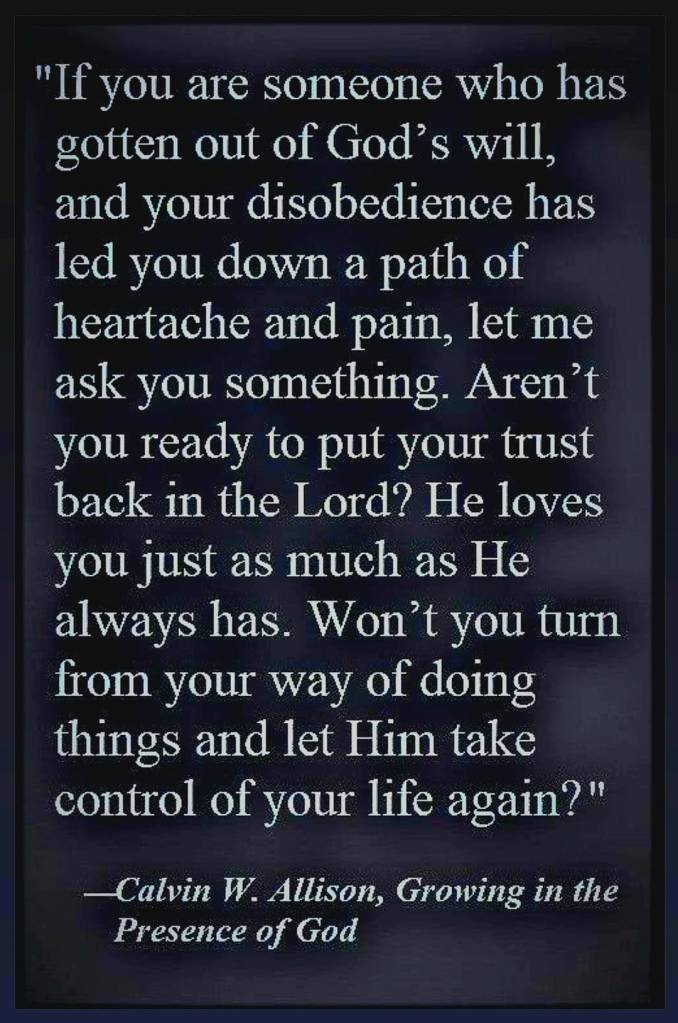
A Poem of Hope

I feel the arms of God around me,
as I lay on my bed at night.
Asleep, I feel the Angel’s touch-
I’m surrounded and held tight.

I don’t know why it is,
that God should love me so,
that he would send His only Son,
to hang there on Death-row.

He guards me night and day,
always bringing love and hope.
Somehow, I know I will survive,
for He will help me cope.

As a father has compassion on his child,
so my Lord has compassion on me.
I know I can count on Him-
There is nowhere from His love I want to flee.

by Helena Fehr

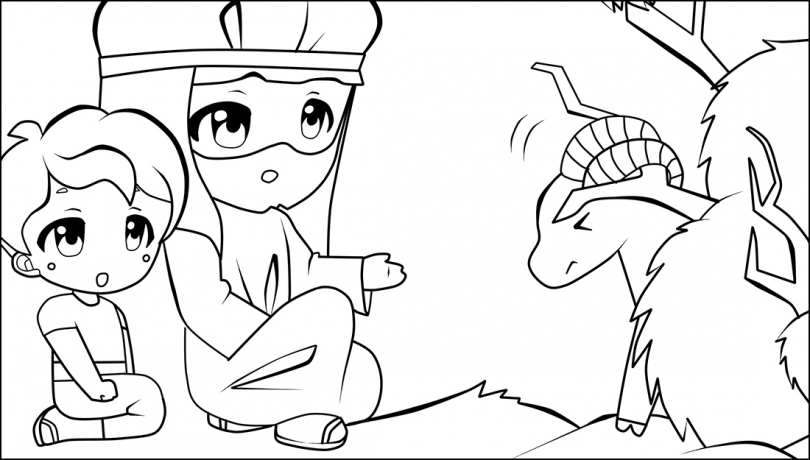
God Tests Abraham’s Faith

by Joshua Travers

God tested Abraham’s trust in Him in a totally unexpected way. God used Abraham to picture the greatest example of His love—long before Jesus gave His life for us.

God Tests Faith of Abraham

“Now it came to pass after these things that God tested Abraham, and said to him, ‘Abraham!’

“And he said, ‘Here I am.’

“Then He said, ‘Take now your son, your only son Isaac, whom you love, and go to the land of Moriah, and offer him there as a burnt offering on one of the mountains of which I shall tell you.’”

This conversation between God and Abraham in Genesis 22:1-2 was the beginning of probably the greatest trial of Abraham’s life. It is a story of faith that goes beyond Abraham’s time. It has a direct impact on us today.

But realize this was a very unusual event—something God does not ask of fathers today.

The son of promise

God said, “Take now your son, your only son Isaac, whom you love” (verse 2, emphasis added). God asked Abraham to sacrifice the son he loved deeply.

Abraham had waited for many years for Isaac to be born, even when it seemed impossible (Genesis 17:15-17). God promised Abraham that he would become the father of many nations through Isaac. The command to sacrifice Isaac seemed to contradict the promises that God had made to him.

To Abraham, this must have been confusing. It might have seemed like God was going back on His promises. Instead of continuing his family through Isaac, God was going to have him sacrificed. But Abraham didn’t say, “I quit.” He did as he was told.

In spite of all the confusion, Abraham stepped out in faith. He knew that God would fulfill His promises, even if that meant doing what seemed impossible. He knew God could raise Isaac from the dead (Hebrews 11:19).

Many chances

Abraham had many chances to quit and keep from sacrificing Isaac. After God commanded Abraham to sacrifice Isaac, the Bible says, “So Abraham rose early in the morning” (Genesis 22:3). Abraham probably spent all night thinking about what God had told him to do. He had all night to decide whether he would obey God or not.

The temptation and chance to stop didn’t end there. The special place where God commanded Abraham to do the sacrifice was three days’ travel away from where Abraham lived (verse 4). For three days Abraham rode his donkey, looking at the son that he knew he would be sacrificing. Those few days would have been some of the worst of Abraham’s life.

As they got near the mountain, Abraham and Isaac continued on foot. Isaac carried the wood, and Abraham took the fire and the knife.

When they finally reached the place, Abraham had to create the altar on which he would sacrifice his own son. After the altar was built, he set the wood in place (verse 9). Then the moment finally came. After days of thinking and preparing, it was time.

The whole thing would have been all too real as Abraham prepared to do what God had said. Then he picked up the knife, took a deep breath, and …

A God who saves

“But the Angel of the LORD called to him from heaven and said, ‘Abraham, Abraham!’

“So he said, ‘Here I am.’

“And He said, ‘Do not lay your hand on the lad, or do anything to him; for now I know that you fear God, since you have not withheld your son, your only son, from Me.’

“Then Abraham lifted his eyes and looked, and there behind him was a ram caught in a thicket by its horns. So Abraham went and took the ram, and offered it up for a burnt offering instead of his son” (verses 11-13).

God saved Isaac! In spite of all the chances to stop, Abraham continued in faith. He passed the test. Knowing that Abraham was willing to sacrifice Isaac, God stepped in and instead provided a ram for the burnt offering.

God is not a God who tests us pointlessly. Instead, “God is faithful, who will not allow you to be tempted beyond what you are able, but with the temptation will also make the way of escape, that you may be able to bear it” (1 Corinthians 10:13).

Just as God was with Abraham and Isaac in this time of trial, so will He be with us in our trials!

What’s the point?

What was the purpose of having Abraham prepare to sacrifice Isaac? Why would God have Abraham go through that? Here are two reasons this story was recorded in the Bible:

  1. To test Abraham’s faith. God had great things planned for Abraham. He knew Abraham would need strong trust and character. He wanted to know if Abraham actually had the faith to sacrifice Isaac. The only way for God to know was for Abraham to actually prepare to do it. Faith isn’t just a feeling. It’s something that we show by our actions (James 2:14-24). For his faith, God gave Abraham many great blessings (Genesis 22:15-18).
  2. To represent Christ’s sacrifice. The sacrifice of Isaac was a symbol of Christ’s sacrifice. Both were firstborn sons who were promised for years and greatly loved by their fathers who were prepared to sacrifice them. God wants us to understand how much He loves us. He was willing to sacrifice His Son because it was the only way to save us. We deserve the death penalty because of our sins. But Jesus was willing to pay that penalty for us!

The story of Abraham preparing to sacrifice Isaac is an incredible story that shows us what true faith is like. It shows us that God is with us, even when things don’t seem to make sense. In the end, God will be there for us during our trials, just as He was there for Abraham and Isaac.

Questions

Here are some questions to think about or talk about as a family:

  1. What is faith?
  2. Why did God want Abraham to have strong faith?
  3. How was what Abraham and Isaac did like what God the Father and Jesus Christ would do?
  4. How was it different?

Fun Facts About The Bible

The Bible was written in three languages

Those languages are Hebrew, Aramaic, and Greek. Most of our Old Testament was written in Hebrew, which was the language the original readers spoke. A few bits of the Old Testament were written Aramaic (looking at you, Ezra and Daniel). The New Testament was written in Greek, the commonly-spoken language of the time.

Do Not Be Hasty

It has been my observation while reading Solomon’s thoughtful epistle Ecclesiastes, he recommends we guard our steps when we enter the house of God to worship. Being near to each other in corporate worship helps us to draw from the common expression of adoration towards Elohim by the community of God. On Sunday morning we move about with quiet expectation, we allow the lion within us to sing, but also to listen, we avoid haste and lack of self-control in our heart, guarding and measuring our thoughts before we utter anything to God. Please understand, He is close, not because we are in the House of God, but because He is close 24/7. He hears our thoughts even before we think them, he surrounds us with his presence; Under his protection, we rest and lean into his shelter. We are wise to let him envelop our worship, and then, in that framework, offer up a respectful sacrifice of praise, embracing and expressing the fear of God (massive respect for the formidable nature of God) in our worship.

Solomon writes — Guard your steps when you go to the house of God. Go near to listen rather than to offer the sacrifice of fools, who do not know that they do wrong. Do not be quick with your mouth, do not be hasty in your heart to utter anything before God. God is in heaven and you are on earth, so let your words be few (Ecclesiastes 5:1-3).  

Solomon’s focus is to guide us away from the world, by showing us the vanity of human-ness, we find the path to God and to our calling, that we may not walk in the way of the world, but by God’s will, nor depend upon the wealth of the world, but focus on prayer, praise, worship and doing the will of God for others. This is why we linger with the community of God; this is why we listen more and talk less.

Consider the fact that Solomon is nudging us towards the House of God; our place of public worship, created by men and women – at God’s direction. Notice in Ecclesiastes that Solomon reflects with regret on much of his life activities (implied in Ecclesiastes 2:4) claiming they were meaningless. I do not recall Solomon regretting creating God’s House, rather he indirectly reflected on God’s House with pleasure, completing the task his father David had assigned years earlier. This observation is not openly discussed in Solomon’s epistle lest it appear to be a point of pride. I think he did find quiet pleasure in building this focal point for the community to gather and worship the one true living God. Some things do not need to be spoken about in detail to be clear.

When David was anxious or confused, he went into the sanctuary of God. David wrote — If I had spoken out like that, I would have betrayed your children. When I tried to understand all this, it troubled me deeply till I entered the sanctuary of God; then I understood (Psalms 73:15-17).

We read in Proverbs – Desire without knowledge is not good, and whoever makes haste with his feet misses his way (Proverbs 19:2). We should render our approach to the one true living God with a quiet pause, take time to compose our heart, avoiding carelessness and haste with our feet. During worship preparation we should harness our thoughts from roving and wandering from the task; for when we worship the one true living God – our sacrifice should be an all-encompassing effort. Some think this level of worship embodies the request from God for Moses and Joshua to put off their shoes (Exodus 3:2-6, Joshua 5:13-15) as a sign of subjection and reverence. I suggest you keep your feet clean (Exodus 30:17-21).

The Deeper Truth is — our sacrifice should not be the sacrifice of fools, that we bring our passive attention, lame thoughts, and careless words (implied Proverbs 15:7-9). We should not bring second best to the table, we should not revel in the sign, ceremony, and performance, without embracing the sense and full meaning of it, for that would be the sacrifice of fools not the sacrifice of praise.

You all know I am a musician; I have spent considerable time on worship teams; I have struggled with this. But, in the end, God accepts our meager offerings. He knows we are broken people who bring a ‘less than perfect worship’ to his alter. If our heart is in the right place, God’s mercy washes over all our failure and brings the true worship to surface. We are blessed to have permission to enter into the temple. Embrace it. Humble yourself and worship the one true living God…

I choose Jesus.