
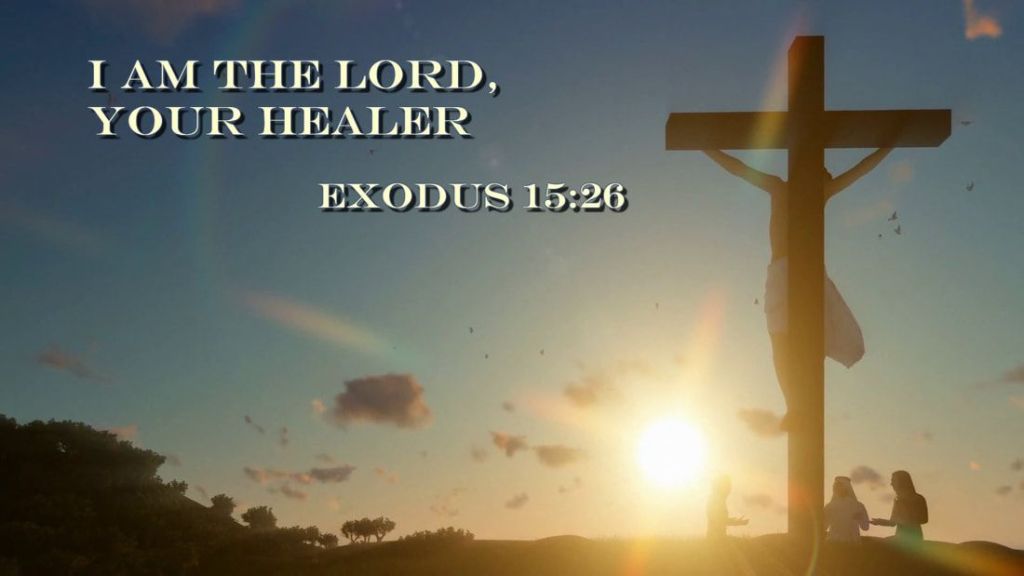
I Am
It was my observation while reading the book of Ecclesiastes, in a mere two sentences Solomon summarizes his findings for all the wisdom present in the twelve chapters of his opus.
Ecclesiastes 12: 13-14 — Now all has been heard; here is the conclusion of the matter: Fear God and keep his commandments, for this is the duty of all mankind. For God will bring every deed into judgment, including every hidden thing, whether it is good or evil (NIV)
Now, let us reduce the two sentences to six words. Fear God and keep his commandments. There we have it. Jesus said — love the Lord your God with all your heart, and with all your soul, and with all your mind. Then came the second thing – love our neighbor as much as we love ourselves. That was simple to express. But what about the commandment – Fear God? I think it is helpful to look at Isaiah 29. For me, this entire chapter helps define the notion of fearing God. The three verses below focus our thoughts.
Isaiah 29:13-16 — These people come near to me with their mouth and honor me with their lips, but their hearts are far from me. Their worship of me is based on merely human rules they have been taught. Therefore, … I will astound these people with wonder upon wonder; the wisdom of the wise will perish, the intelligence of the intelligent will vanish. Woe to those who go to great depths to hide their plans from the Lord, who do their work in darkness and think, “Who sees us? Who will know?” You turn things upside down, as if the potter were thought to be like the clay! Shall what is formed say to the one who formed it, “You did not make me”? Can the pot say to the potter, “You know nothing”? (NIV)
These are strong words; they describe someone who does not fear Elohim. This passage can be reduced to a single phrase – Respect Me, I am the one who made the heavens and earth. Respect Me, if not for what I did, then for what I Am. Respect Me, Obey my commandments. Respect Me, Love your neighbor. Respect Me, Love my Son. Respect for Elohim leads to blessings and our contentment that all is right in the world. Resistance melts away and becomes peace. We feel happy in our place.
The fear (respect) for the things of God starts when the King of Kings occupies our heart. We quickly develop a reverence and appreciation for his majesty, we yield to his authority, and we pull away from things that displease him. We see and embrace his wisdom. We freely embrace him and worship with all the honor due to his name and actions. This becomes true devotion, fledgling at first, but soon becomes a comfortable stride, a power walk with God.
Scripture becomes much more personal. We become aware that God is talking to us, revealing himself to us in the same way that Martin Luther, or Augustine learned about the things of God. One moment of insight after another. We gain understanding and knowledge. Then, as we experience the application of God’s plan for us, we become wise. We learn this respect by absorbing his statutes and precepts from scripture. We know that what we think quickly becomes how we act and how we relate to others.
This acquisition of insight is the process of the Spirit of God writing the word upon our heart. The more dominant this respect becomes the more careful we are with the application of His word in our life. We know that this is no game, it matters how we process and relate to the message. If we are not settled on the inside, our actions will be bumpy, inconsistent – the internal war will be played out in our actions with others. This idea of respect is the whole of man’s relationship with God. It requires care and feeding. It requires alone time, wrestling with the word of God. It requires regular visits with God. It requires interaction with others of similar mind. It brings peace. It brings contentment. It brings rest.
I choose Jesus.
If age doth speak of wisdom learned,
And battles won, and sorrows earned,
Then youth doth boast of hopes to come,
Of strength to waste, and wisdom shunned.
But if youth could seek instead the wise,
and see life through more vintage eyes
And turn to God while still they sow
The seeds of harvest they’ve yet to know,
They might then be blessed to reap
A bounty they’ll delight to keep,
And share with those who come behind
A harvest of a richer kind.
—Vicki Baird
It has been my observation, during the time we spend talking to God, he gradually aligns our will with his, changing the way we view a situation, and changing the way we respond to a problem. Sometimes we miss his answers (because we are not listening or we are expecting a different answer so we do not recognize it when it comes), and other times the answer comes through reading the Bible or talking to others, but God will answer. His wisdom sees farther and loves deeper than we can imagine. God enables us to set our vision for an eternity fellowshipping with those he loves, not just gratification in the immediate moment. There is no one else who can see and know what he does, and he delights to share his wisdom with us in prayer.
If you have an approach to formulate your prayer, then stick with it. Nurture your method and grow close to God. If you were curious about finding something different to formulate your prayer time, you might consider using the ACTS approach (adoration, confession, thanksgiving, supplication). Let us take a closer look at the four elements.
Adoration. Begin your prayer in adoration and praise of God. When the time is right, focus on the absolute majesty and wonder of who God is and how He desires to be with you, always. If you want inspiration, you can pray with a Psalm of praise such as Psalm 100, or Psalm 67.
Contrition. Ask the Holy Spirit to reveal your sinfulness and need for God’s mercy and grace. Become comfortable talking with God about specific sins — repent and seek forgiveness. Check out Psalms 51 for an example.
Thankfulness. Take the time to thank God for the positive things in your life. Try to notice the blessings you often take for granted. Take a look at Psalms 77 for an example.
Supplication. lift up your cares and concerns to God. Pray for the people in your life, for those who are suffering, for the needs of all people throughout the world. Ask God to show you who to pray for today.
If the Holy Spirit—God’s way of being with us, working through us, and speaking to us—is the way in which continuity is maintained between the life of Jesus and the life of Jesus’ community, then prayer is the primary way we receive and participate in that presence. Prayer is our way of being attentively present to God who is present to us in the Holy Spirit. This frees us from thinking that prayer is about our posture or our ‘right words.’ Prayer is a part of being attentive to the God who is already present with us; to the God already at work in us, our communities, and the world; and to the God who wants us to participate in his ongoing work.
As we pray, we are dependent on the Holy Spirit whether we recognize it or not. Paul says — we do not know what we ought to pray for, but the Spirit himself intercedes for us through wordless groans. And he who searches our hearts knows the mind of the Spirit, because the Spirit intercedes for God’s people in accordance with the will of God (Romans 8:26–27).
In this passage, Paul is saying more than — When you cannot find the words, the Spirit will help. We are given assurances the Holy Spirit is interceding as needed. As needed, the Holy Spirit will take whatever we offer, however rich or impoverished our words are, however inadequate we feel, and intercede. This is an amazing part of prayer and of the relationship we foster with the one true living God. He fills in the blanks. We are struggling, unsure how to proceed, he moves with authority. He then gives us glimpses of his plan, his focus, his assurance we are in a safe harbor. Why? Because we have yielded to him, we have conformed our requests to his will.
In Revelation 5, John describes a vision of a slain Lamb upon a throne, surrounded by elders who are constantly worshiping. Each elder is holding a golden bowl full of incense, the incense in the bowl are the prayers from the people of God. Our ordinary, everyday prayers reach the very presence of God. They fill the throne room. They are the smoke that surrounds the throne.
I choose Jesus.

It has been my observation while reading Ezra, that Cyrus was a significant player in the transition of Israel back to the promised land after the 70-year exile to Babylon. Cyrus was not a believer, but he was clearly being guided and rewarded by the one true living God for his actions. Who was this Guy?
Cyrus was a Mede, some say his father was Astyages, the King of Media. There is no clear biography of him that has survived for us to read. The consensus of historians suggests he was an outcast in his infancy; he was found and raised by a Bedouin family of shepherds. Like Moses, he was a very smart person and found his way to the throne, demonstrating his iron when Croesus king of Lydia attacked his country. His defense and counterattack enabled him to take Sardis which led to ownership of a very wealthy kingdom of Lydia. He became a powerful, aggressive king. In all this, he maintained a positive demeanor that was noted by the one true living God.
Isaiah wrote – This is what the Lord says to his anointed, to Cyrus, whose right hand I take hold of, to subdue nations before him and to strip kings of their armor, to open doors before him so that gates will not be shut: I will go before you and will level the mountains, I will break down gates of bronze and cut through bars of iron. I will give you hidden treasures, riches stored in secret places, so that you may know that I am the Lord, the God of Israel, who summons you by name. For the sake of Jacob my servant, of Israel my chosen, I summon you by name and bestow on you a title of honor, though you do not acknowledge me. (Isaiah 45:1-4)
Clearly after all this, Cyrus was a very prominent figure in the middle east. He pursued many countries and was able to expand his influence over Babylon. Eventually, in conjunction with his uncle Darius and with the forces of Persia, he successfully attacked Babylon. See Daniel 5 for details. Why Babylon? This was an exceptional acquisition; Babylon was crazy rich and strong. The city was huge, nearly 45 miles in diameter. The city walls were so thick it was said that six chariots could ride side by side upon them. Yet, Cyrus seems to be capable of taking Babylon. God empowered Cyrus to rescue his people from Babylon.
Ezra wrote — In the first year of Cyrus king of Persia, to fulfill the word of the Lord spoken by Jeremiah, the Lord moved the heart of Cyrus king of Persia to make a proclamation throughout his realm and also to put it in writing. This is what Cyrus king of Persia says: The Lord, the God of heaven, has given me all the kingdoms of the earth and he has appointed me to build a temple for him at Jerusalem in Judah. Any of his people among you may go up to Jerusalem in Judah and build the temple of the Lord, the God of Israel, the God who is in Jerusalem, and may their God be with them. And in any locality where survivors may now be living, the people are to provide them with silver and gold, with goods and livestock, and with freewill offerings for the temple of God in Jerusalem (Ezra 1:1-4).
I think we should take a close look at the fact that Cyrus is called God’s anointed, Cyrus was groomed to lead. He could be counted on when the going got a bit rough. In a loose sense, he was a ‘type’ of a Messiah for Israel during their time of trouble. We must be incredibly careful to note that Cyrus was not part of the Hebrew tribes. He was an outsider. Yet he was used by God. What can be learned from this?
The deeper truth – God can use anybody, any place, any time to accomplish his will. We are privileged to be included and let in on his plan. Are you having trouble with your non-Christian boss? God has demonstrated he will influence others (non-Christians) to do things that will further His kingdom. No one is out of bounds for his influence. When his people are in trouble, God will move to help them.
I choose Jesus.

 Shalom Talk