
Obstacles to the Plan

Written By Dan

It was my observation while reading Deuteronomy that we are instructed to Love the Lord our God with all our heart and with all our soul and with all our strength and with all our mind (Deuteronomy 6:5). Additionally, I noted considerable New Testament guidance on how to wrap your heart around God.

For example — Show earnestness in realizing the full assurance of hope to the end (Hebrews 6:11); Love one another earnestly from the heart (1 Peter 1:22); Strive to enter by the narrow gate (Luke 13:24); Labor for the food that endures to eternal life (John 6:27); Be steadfast, immovable, always abounding in the word of the Lord (1 Corinthians 15:58); Let us not be weary in well-doing, for we shall reap if we do not faint (Ephesians 5:15); and Work out your own salvation with fear and trembling (Philippians 2:12).

Additionally, Titus 2: 11-15 says — For the grace of God has appeared that offers salvation to all people. It teaches us to say “No” to ungodliness and worldly passions, and to live self-controlled, upright and godly lives in this present age, while we wait for the blessed hope—the appearing of the glory of our great God and Savior, Jesus Christ, who gave himself for us to redeem us from all wickedness and to purify for himself a people that are his very own, eager to do what is good. These, then, are the things you should teach. Encourage and rebuke with all authority. Do not let anyone despise you. (NIV)

How do we respond to this extensive set of guidelines from Scripture? We strive to be like Jesus. We labor to find his pace, his stride. We abound in hunger for scripture. We become zealous and earnest for the peace of God. We find the path away from laziness and lukewarmness. We take to the run, with the stride and confidence held by a winner. Jesus makes us a winner. For Jesus has placed this mantle of strength upon us to operate in this world but not be corrupted by this world. We immerse ourselves in the strength he supplies to magnify His glory.

So, what do we do? I think we are to lay aside the heavy load upon our backs, the sin of this world that surrounds and covers us like a heavy scratchy wool blanket. An experienced runners discards everything but what is necessary; this is also true for spiritual racing. Then we find our stride and enter the race. We run the race with patience and endurance. To run this race, I work to lay aside all the things that hinder me, that nip at my heals, I bring plans to guide my feet. The obstacles are there to keep me from being the man that God called me to be. The obstacles are there to neuter the calling I received from God. Then I need to bring up the more slippery obstacles. Paul referred to them as disputable issues.

Romans 14:1-4 says — Accept the one whose faith is weak, without quarreling over disputable matters. One person’s faith allows them to eat anything, but another, whose faith is weak, eats only vegetables. The one who eats everything must not treat with contempt the one who does not, and the one who does not eat everything must not judge the one who does, for God has accepted them. Who are you to judge someone else’s servant? To their own master, servants stand or fall. And they will stand, for the Lord is able to make them stand.

There will be things that people, convinced they know best, will impose on others, using vague scripture to make their case. We must be careful not to become entwined in disputes over vague issues. They are nothing more than speedbumps. Nothing more than obstacles to the plan.

I choose Jesus.
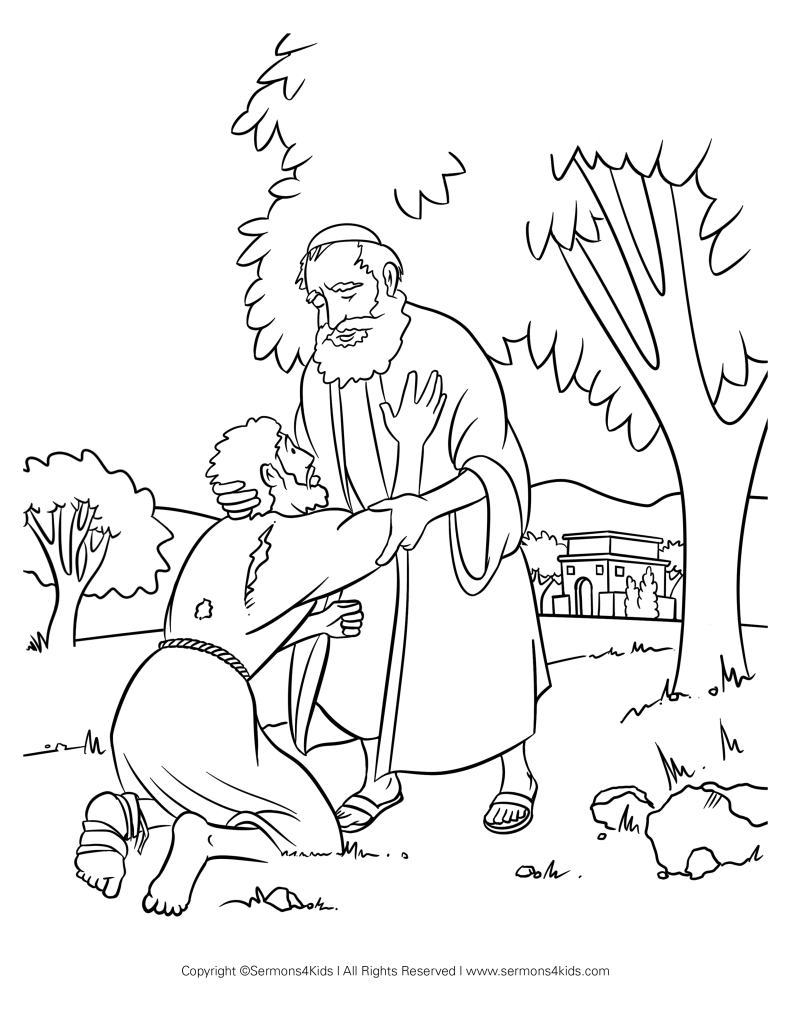
Parable of a Prodigal Son

Jesus told a parable about a man with two sons. A parable is a simple story to help people understand something hard to understand – something that is important to understand.

In this parable, a man had two sons. The father knew that someday he would get very old and die. When he died, all his money, house, and farm would be given to his two sons. The money and property that children receive from someone who dies is called an “inheritance”.

The younger son was very impatient. He did not want to wait for his father to die to get his inheritance. He wanted his father’s money soon so he could go and spend it. He asked his father to divide the money and give him his part. The father wanted his son to be happy, so he did as his son asked. He divided the money and gave half to his youngest son.

The younger son took all the money and left home. He went to live in another country that was very far from his home. He bought everything that he wanted. He spent money on parties and wasteful things. People liked him because he had lots of money and bought things for them.

The problem was that soon the money ran out. He had no more money for parties, and his friends stopped liking him. It turns out that they weren’t real friends after all. They only liked him when he bought them things. Now that he had no money, they did not even want to be around him.

Soon, the younger son ran out of food and became very hungry. He had to think of a way to earn money, or he would starve!

The situation became even more serious because there was a famine in the country where the son lived. That meant that there was hardly any food for anyone to eat. Many other people were hungry. too

A farmer who owned pigs needed a helper, so the son began to work for the farmer. His job was to feed the pigs. The son was so hungry that even the pig food started to look good to him.

Finally, the son began to think about his bad choices. He thought about his father and brother. At home, people loved him. At home, there was plenty of food.

The son began to realize that he had made a terrible mistake. He should never have asked his father to give him the money early. He should have been patient. If only he could go back in time and be a good son.

“But it is too late now,” he thought. “I have done many bad things. I am not good enough to be a son now. My father would never forgive me and take me back.”

But the son had another idea. His father had many workers and many jobs to do. They worked hard but at least they had enough food. If he asked his father nicely, then maybe his father would allow him to be one of the workers. He could take care of the animals and work hard.

So, the son decided to return home.

The son thought the father would be angry, but as he got closer to his old home, he was shocked to see his father running to meet him.

When the father saw his son coming, he was filled with love for him. He was so happy to see his son that he threw his arms around him and gave him a big hug and a kiss. “My son has returned to me!” his father cried.

The son said, “I am sorry, but I have done terrible things. I do not deserve to be your son. I can just be one of your workers.”

But the father did not treat him like a servant at all. He welcomed him home as his son. He told the servants to cook a big dinner. He put a beautiful robe on his son. He put a ring on his finger and special sandals on his feet.

“I thought my son was dead, and I would never see him again. But my son has come back to me!” the father said. “He was lost, but now he is found.”

The father had a special meal prepared, and everyone in the household celebrated.

Almost everyone, that is. When the older son saw everyone celebrating, he became jealous and very unhappy. “This is not fair,” he thought. “I have been the good son all along, but I am not getting the attention. I never left home and spent all the money, but nobody is having a party for me.”

But the father went to the older son and told him he loved him too. He explained to the son why he was so happy. “Don’t you understand, son? I am so happy because I thought my son was dead, but now I know he is alive!”

“He came back to me. He was lost, but now he is found!” he continued, “Please, let’s celebrate together.”

Jesus told this parable so that people would understand something about God. Sometimes we are like the young son in the parable. We do wrong things. We start to feel very bad. We might think that God would never forgive us.

But God does forgive us! When we tell God we are sorry, he is so happy. He is happy because he loves us and always wants us to do the right thing.

Do you think God will love you and forgive you if you tell him you are sorry for something?

Scripture Reference: Luke 15:11-32

Announcements from the Angelic Host

Essay By Dan

It has been my observation that angels are remarkable creatures, God created a wonderful group of beings that quietly move with power and grace behind the spotlight. I read a while back in a Billy Graham book they could be called God’s Secret Agents, not seeking to draw attention to themselves, but to do God’s bidding. One of the reasons I think we may not be personally aware of angels in our life is because they are able to do their job without a revelation to us. The Bible cites a limited number of instances when God has given us a glimpse of these beings at work.

The Bible does not precisely say how many angels exist. It was a “multitude” of the heavenly host that told the shepherds of Jesus’ birth (Luke 2:13). Daniel 7:10 tells us — Thousands upon thousands attended him; ten thousand times ten thousand stood before him. (NIV). That would suggest there are at least one hundred million angels—I suspect the host of angels is a force too vast to imagine. Perhaps that is why Job 25:3 asks — Can His forces be numbered? (NIV).

I wonder sometimes why Scripture does not provide a precise description of how angels look. We do have some verbal imagery; therefore, we know they can appear in different forms. Occasionally angels appear as ordinary humans; we are told it is possible to interact with angels without knowing. Hebrews 13:2 tells us — Do not forget to show hospitality to strangers, for by so doing some people have shown hospitality to angels without knowing it (NIV).

Even though angels can be overwhelming in appearance, we should not worship angels. John tells us in Revelations 19:9-10 — the angel said … ‘Blessed are those who are invited to the wedding supper of the Lamb!’ And he added, ‘These are the true words of God.’ At this I fell at his feet to worship him. But he said to me, ‘Do not do that! I am a fellow servant with you and with your brothers and sisters who hold to the testimony of Jesus. Worship God! It is the Spirit of prophecy who bears testimony to Jesus’ (NIV).

A second time in Revelation 22:8–9 John tells us — when I heard and saw, I fell down to worship before the feet of the angel who showed me these things. Then he said to me, ‘See that you do not do that. For I am your fellow servant, and of your brethren the prophets, and of those who keep the words of this book. Worship God’ (NIV). The angel would not accept John’s worship.

It seems prudent to mention Lucifer. I am not interested in promoting his role, I shall not magnify his feral rebellion. But it is necessary to mention him because we may encounter an angel with a message at some point in our Walk with God. We know there are holy angels and unholy ones (fallen angels or demons). If an awe-inspiring angelic being were to appear to us right now, we would be inclined to believe just about anything he said—it is hard to not be awestruck by something so powerful.

What do we do? Scripture tells us to assess any so-called angel’s message (or a teaching from any source) with what we find in God’s Word. “But even if we, or an angel from Heaven, preach any other teaching to you than what we have preached to you, let him be cursed” (Galatians 1:8 paraphrased). Simple? Ya. But we need to guard our hearts. We need to keep our wits about us. Test first. Evaluate any message that appears to be from a heavenly source before you commit. Align the message you are hearing with scripture. If it does not align with scripture, then discard the message. The Word of God does not lie, it is absolute truth. Trust the Logos. Trust the Word of God over all other messages.

I choose Jesus.

The Deal is Off!

Essay By Dan

It has been my observation while reading the Book of Hebrews, the author has gone to great lengths to relate the importance of the last supper to the old and new covenant. Now let us couple the message from the Book of Hebrews on the covenant with events that occurred during the Last Supper. We see in Matthew and Luke that Jesus explained to the disciples why He was going to be nailed to a cross. During that discussion, He took them right to the blood of the covenant and its purpose therein.

In Matthew we read – “While they were eating, Jesus took bread, he broke it, and gave it to his disciples, saying, ‘Take and eat; this is my body.’ Then he took a cup and he gave it to them, saying, ‘Drink from it, all of you. This is my blood of the covenant, which is poured out for many for the forgiveness of sins. I tell you; I will not drink from this fruit of the vine until that day when I drink it new with you in my Father’s kingdom.’ ” (Matthew 26:26-29 paraphrased)

At the Last Supper, Jesus carefully explains the spilling of his blood initiates the new covenant (atoning ransom sacrifice for our sins), this ransom message is noticeably clear in Matthew. Jesus presents himself as both the high priest (mediator) offering the sacrifice and the sacrifice himself.

In Luke, we read — After taking the cup, he said, “Take this and divide it among you. For I tell you I will not drink again from the fruit of the vine until the kingdom of God comes.” And he took bread, gave thanks, broke it, and gave it to them, saying, — This is my body given for you; do this in remembrance of me. This cup is the new covenant in my blood, which is poured out for you (Luke 22: 17-20 paraphrased).

Every time we partake in Communion, we hear the message specifying why we take the cup: “This cup is the new covenant in My blood which is poured out for you for the forgiveness of sins” You are hearing the explanation from Jesus of why He had to die. Communion is part of the definition for a new covenant with God, you violated the old covenant, you deserve to die. Jesus made a new deal for us. Jesus implies — I spoke to my Father, I am going to die (ransom sacrifice) in your place, then my Father will be glorified, and my followers will be redeemed forever.

When I ponder on the implications of communion, I think that Jesus is saying — every time you come to that table, I want you to remember that you are in fellowship with My Father, not because of anything that you have done, but because of what I have done. I died in your place to fulfill the curses that should have fallen on your head. I died the death of a covenant-breaker, even though I was the one who was faithful to the covenant so that all you covenant-breakers who believe on Me, who trust in Me, who have faith in Me alone for your salvation, might come into fellowship, reconciled with God.

Final thoughts – the author of Hebrews is encouraging his Jewish readers to not look back to the old covenant rituals as their way into fellowship with God. The old rituals mean nothing apart from Jesus. Do not look at your works, your service, your status, your reputation, your church job title; do not look at anything but Jesus for your reconciliation with God. Why? If we distance ourselves from the ransom and resurrection of Jesus, inserting our works as proof of worthiness into the formula, there is no reconciliation. The deal is off – the impact of the new covenant has been rendered impotent by our feeble proof!

I choose Jesus.

The Passover

Essay by Dan

It has been my observation, while reading the Book of Exodus, the Hebrews were compelled to provide backbreaking labor in the brickyards of Egypt; but, despite the hardship, they prospered. They became a large nation with no way to loosen the shackles that held them – from that situation — our story begins.

The Book of Exodus opens with God looking upon the Hebrews. The Lord said to Moses– I have … seen the misery of my people in Egypt. I have heard them crying out because of their slave drivers, and I am concerned about their suffering. So, I have come down to rescue them from … the Egyptians and to bring them up out of that land into a good and spacious land, …. So now, go. I am sending you to Pharaoh to bring my people the Israelites out of Egypt (Exodus 3:7-10 paraphrased).

Then a battle ensued, a battle between idols and the one true living God. Our God pitted Himself against the idolatry of Egypt with plagues. Each plague originated from the one true living God. The plagues were directed against the idols of Egypt. First, the sacred Nile was turned to blood; then there were frogs, lice, then flies that swarmed over the land; the livestock sickened and died; boils broke out on both man and beast; hail and locusts devastated their crops; then darkness enveloped them for three days. God’s message was straight forward. The plagues demonstrated to the Hebrews their redemption and emancipation was in progress; not because of any merit within them, but solely by His sovereign grace and power. The demonstration culminated with the last plague — the death of the firstborn (implied from Exodus chapters 7-13).

God said it would be a night that they would never forget. Today if you go into the home of most Orthodox Jewish families, you will find the Passover on their calendar. After all these years, Passover is still remembered. This is the day that God delivered His own. The Hebrews in Egypt were asked to select a lamb; they were to slay it and eat it for dinner accompanied by unleavened bread and bitter herbs. The blood of that lamb was to be put outside on the doorposts of their home. On that night, the death angel arrived. He did not take time to determine if people on the inside of the house were praying. He did not ask if they had joined the right political group. He did not examine their walk with God. He did not inquire if they were Hebrews. The only thing he checked for was blood on the doorpost. When he saw the blood, he passed over the house. If the blood was not present on the doorpost, the firstborn in that unprotected house was killed (implied in Exodus 12:1-12).

Passover was judgment from Almighty God upon a sinful nation and a sinful people. The firstborn who lived through that night knew that they were redeemed by the blood of a lamb. The single thing that enabled God’s redemption was blood. That night the Hebrews ate the Passover and were redeemed by the lamb’s blood. They consumed the lamb, and they consumed unleavened bread. Does this sound like a precursor to Communion? We have the body of Jesus (lamb, Bread) and blood of Jesus (lamb’s blood). Is Communion a reminder of Passover? I think it is (implied in Luke 22:14-19). There is more…

Do you remember my previous essay on eagle wings? “Ye have seen what I did unto the Egyptians, and how I bore you on eagles’ wings and brought you unto myself” (Exodus 19:4). Isaiah 40:31 says “Those who hope in the Lord will renew their strength. They will soar on wings like eagles; they will run and not grow weary; they will walk and not be faint.”  Deuteronomy 32:11 says — “As an eagle stirs up her nest, flutters over her young, spreads abroad her wings, taketh them, bears them on her wings.” We are lifted-up high; we go where no ordinary man can go; we pass over trouble using a transport mode that no ordinary person can use. Eagle Wings.

I choose Jesus.

A Quiet Evening in Bethlehem

Sometimes, it seems proper just to quote a lot of scripture, today is one of those days. The passages below from John are NIV and passages from Luke are MSG. The brackets mark subtle text changes (I replaced ‘hostel’ with ‘inn’; I guess I am a bit more traditional than I first realized). Take your time, breathe in the message… Continue reading “A Quiet Evening in Bethlehem”

Angels all Around Us

Pepper asked me a few weeks ago – “What exactly is an Angel?”  I did not have much of an answer. So, a few days ago I scribbled the word Angel on a blank page and started learning afresh. Here is a portion of what tumbled out of scripture. There will be more from me in other missives soon to be written on this topic. Continue reading “Angels all Around Us”